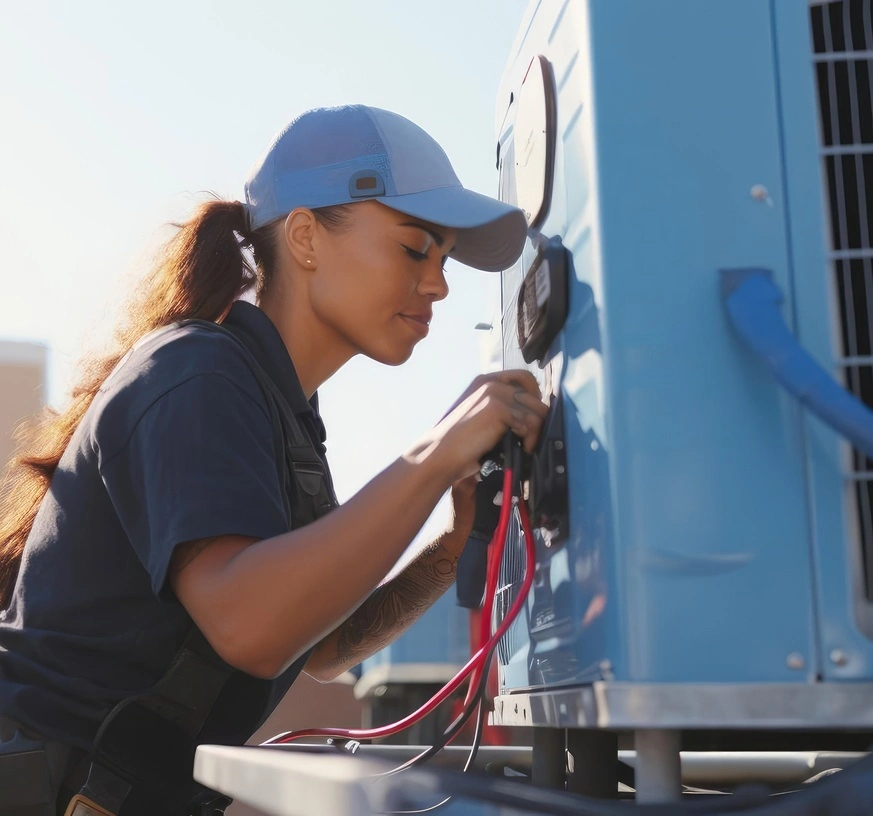

Whether you’re finishing a commercial job installing new heaters for winter in a New England warehouse or fixing the air conditioners for a golf course before an early Arizona summer, finances can feel strained while you wait for corporate accounts to pay. That’s when a business loan for an HVAC company makes sense. Specifically, when your business needs to:
- Cover cash flow shortfalls.
- Buy heavy, long-lived equipment or stock inventory.
- Expand when there is a time-sensitive opportunity.
Your HVAC business might face a cash crunch when the general contractor is taking longer than usual to pay subcontractors, because the weather was milder than expected causing a shortage in work, or because costs rose unexpectedly. A working capital loan can help cover these costs as it’s only temporary until payments are released.
Buying equipment, stocking inventory, and expanding your business are other situations where you’re able to plan ahead, giving you time to figure out the best financing option and build a cash reserve to save on the costs of borrowing. For each of these situations, here’s how you can tell if a business loan makes sense for your company and which type of business loan works best.
There are a few types of business loans and financing options that can help, as they’re designed for different purposes. Some have shorter payback periods or are immediately available once approved, as the amounts are smaller and you can clear the debt quickly since the use is for immediate needs and you recover the revenue faster. Other forms of financing are for longer-term investments where the money is used for more expensive purchases or investments that take longer to break even and become profitable.
Cover Cash Flow Shortfalls
Business loans make sense when your HVAC business faces a cash flow shortfall when:
- Corporate customers delay paying invoices.
- Monthly operating expenses (OpEx) are due before revenue comes in, you don’t have cash on hand, and you can’t sell any assets to cover the gap.
- Important staff quit in the middle of a job and you need to pay extra for overtime or to bring on more expensive laborers to make sure the job gets done.
- You bid a fixed-price job but supply shortages force you to pay more for parts.
- Unusual weather crushes demand, like a mild winter where heaters don’t break, or you work in a vacation destination and an economic shock causes tourism to dip.
Short-term business loans make sense for cash flow gaps because approvals and funding are fast, so you can cover immediate financing needs. The payback period is short — some are three or six months — so you can clear the debt fast and not rack up interest costs.
Working capital loans give you flexibility to use funds from the loan on almost any operating expense, whether that’s payroll, supplies, rent, or even advertising. This comes in handy when your main situation is a mismatch between cash going out the door and cash coming in. This could be because you have to pay rent, utilities, and other OpEx by the 5th of the month but you aren’t able to collect customer invoices until the 15th.
Business lines of credit (LOC) make sense when you need new tools or parts for an HVAC job and don’t have cash on hand. You’re able to borrow up to the predetermined limit your lender sets and you only pay interest on the amount you draw. The interest rates are higher than business loans if you don’t clear the balance, and there could be a draw fee each time you take money out.
Equipment or Inventory
Purchasing equipment or stocking inventory is where business loans can help an HVAC company, as the funds can be used to:
- Buy or lease new and used work trucks or heavy equipment.
- Front the cash on commercial jobs for rooftop units, split systems, VRF systems, or other big-ticket items.
- Stock up on inventory for the upcoming season, whether you’re anticipating a need for pallets of refrigerant or a winter where pilot burners will be the hot item to have on hand.
The best types of loans for these situations can be either short-term or long-term and have the benefit of built-in collateral to secure the loan for easy approvals.
When you need to buy boom trucks, forklifts, cranes, or sets of RTUs, equipment financing loans are your best bet for two reasons:
- They work for both new and used equipment.
- The equipment you buy works as collateral for the loan, so you don’t need to pledge other assets or provide personal guarantees in most cases.
Approvals are also quick because the built-in collateral is easy to appraise and determine its value over the course of the loan. This way, if you default, the lender can recover their losses by selling off the equipment.
SBA loans are a good option when you’ve been denied financing by traditional means and have extra time to go through the government approval process, which can take between 30–90 days. If you have the time to wait — say, 4 or 5 months until the busy season — the interest rates will be lower as the SBA caps them, and you can borrow up to $5,000,000 depending on what the lender will approve.
For spare parts on maintenance jobs, working capital loans or lines of credit work well, but for situations where you need to stock a full line of inventory like air filters and compressors, inventory financing loans make sense. These are similar to equipment financing where the inventory serves as loan collateral, making it easier to get approved. You’ll have revenue coming in as you sell the inventory, and the assets can be liquidated in case of default.
Expanding Your Business
Expanding your HVAC business is the third situation where a business loan makes sense, and the financing is flexible enough to be used to:
- Get new customers via advertising and marketing.
- Expand into new cities or regions.
- Acquire a competitor or complementary type of business to expand your offerings.
Working capital loans and lines of credit make sense for advertising campaigns like running search ads for consumers searching for “AC repair near me” and to build a customer list for commercial jobs. They can be used for digital marketing on social media, search engines, and AI, as well as traditional advertising like tradeshow booths for B2B deals and postcards to local companies.
Expanding to new cities or buying another business takes more capital, making SBA 7(a) loans a great option for general-purpose needs. When you’re expanding to a new market or need to build a new location, SBA 504 loans are the better option for purchasing real estate, building new facilities, and buying heavy equipment. The 504 option tends to have lower interest rates and down payment requirements, in addition to better terms for large asset purchases and investments.
When you’re acquiring a competitor and your permanent financing won’t close on time, using a business bridge loan can get you quick access to financing to cover the purchase until your regular business loan closes. This works to secure earnest money when acquiring a company, including competitors or complementary businesses like a plumbing company or electrical business, so you’re able to offer customers more services on the same job.
Bridge loans will have higher rates than standard term loans, but the total amount of interest you have to pay may be lower since you pay them off when permanent financing gets approved. This also means they don’t make sense if you’re unsure whether you can get permanent funding.
No matter what the next seasons bring, business loans will help your HVAC business in any situation where you face a short-term cash crunch, when you need to buy or lease equipment and inventory, and when you want to expand your business through advertising for new customers, by opening a new location, or by acquiring another business.
SmallBusinessLoans does not provide tax, legal or accounting advice. This material has been prepared for informational purposes only. You should consult your own tax, legal and accounting advisors.